
Introduction
When developers move from frontend to full stack using MERN, they enter a new world: server-side JavaScript.
Node.js is not just another runtime — it is what allows JavaScript to leave the browser and power servers, APIs, real-time apps, and enterprise platforms.
In professional training environments like CuriosityTech, where learners are groomed for real company projects, Node.js is taught as the heart of backend engineering. Without understanding how Node works internally, developers write slow, unstable, and memory-hungry applications.
Day 8 is where MERN developers stop being frontend coders and start becoming system builders.
1. Why Node.js Changed the Web
Before Node.js:
- PHP ran servers
- Java ran servers
- JavaScript lived only in browsers
Node.js broke this wall by letting JavaScript run on servers. This allowed companies to build:
- APIs
- Microservices
- Chat systems
- Payment engines
all using the same language on both frontend and backend.
This is one reason why MERN developers are in high demand across startups and enterprises.
2. Understanding the Event Loop
The Event Loop is the engine of Node.js.
It is what allows Node to handle thousands of users with minimal resources.
Instead of creating a new thread for every request, Node:
- Accepts requests
- Places them in a queue
- Processes them asynchronously
- Sends responses when ready
This makes Node:
- Fast
- Lightweight
- Highly scalable
This is why large real-time platforms trust Node.js.
3. Event Loop Architecture
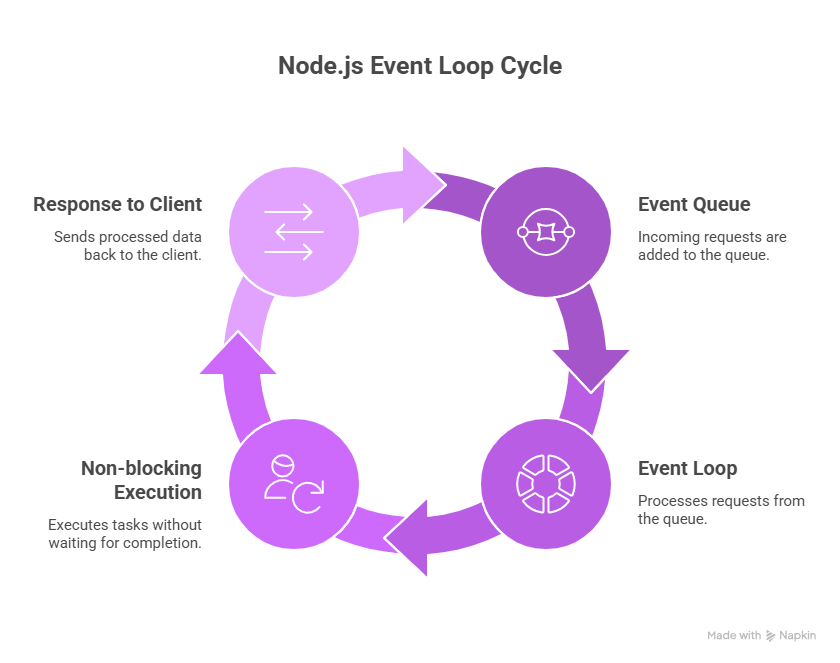
This structure allows Node.js to serve many users at once without crashing.
4. What Are Modules in Node.js
Modules are how Node stays organized.
Instead of one giant file, professional Node projects use:
- Authentication modules
- Database modules
- API modules
- Utility modules
This keeps large MERN applications:
- Clean
- Maintainable
- Scalable
This design principle is deeply emphasized at CuriosityTech because real companies expect clean codebases.
5. Why Modular Design Matters
In large applications:
- Bugs are isolated
- Features are reusable
- Teams can work together
- Systems scale better
This is why Node.js projects built using modules last longer and perform better.
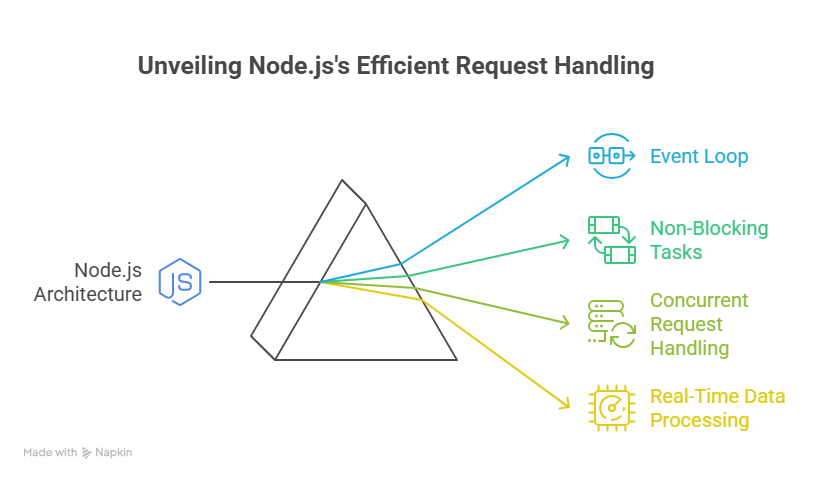
Infographic Description
Title: How Node.js Handles Requests
Conclusion
Node.js is not just JavaScript on a server. It is a high-performance event-driven system designed for modern applications.
Understanding the Event Loop and modules gives MERN developers the power to build:
- Fast APIs
- Real-time systems
- Scalable platforms
And this is why professional training environments like CuriosityTech treat Node.js fundamentals as mission-critical knowledge.