Introduction
By 2025, MERN has moved far beyond being just a stack for small web applications. It has become the foundation for SaaS platforms, fintech systems, learning portals, and large-scale cloud-based products. What makes MERN powerful today is not just MongoDB, Express, React, and Node, but how they are now integrated with modern tools like Next.js, TypeScript, serverless infrastructure, and cloud-native deployment models.
At CuriosityTech, students are not trained on outdated MERN patterns. They are exposed to the same technologies used by modern startups and global companies, ensuring that what they learn at curiositytech.in remains relevant for years to come.
Day 24 is about understanding where MERN is going, not where it has been.
The rise of Next.js in the MERN ecosystem
Next.js has changed how React applications are built. Instead of relying only on client-side rendering, modern MERN systems now use server-side rendering, static site generation, and hybrid models. This means faster load times, better SEO, and smoother user experience.
In 2025, many MERN-based companies use Next.js to build their frontend because it allows them to serve content quickly while still connecting to Node and MongoDB on the backend. This combination is powerful for eCommerce, blogs, dashboards, and SaaS products.
CuriosityTech integrates Next.js into MERN training so students can build applications that are not only functional but also fast, SEO-friendly, and scalable.
TypeScript becoming the standard
JavaScript gave MERN its flexibility, but TypeScript gives it reliability. In 2025, most serious MERN projects use TypeScript to avoid bugs, improve code quality, and make large teams work efficiently.
TypeScript helps developers catch errors before applications go live. This is crucial when building financial apps, healthcare platforms, and enterprise dashboards. Developers trained at CuriosityTech are introduced to TypeScript because companies now expect MERN developers to write clean, type-safe code.
Cloud-native MERN applications
MERN in 2025 is deeply connected with the cloud. Applications are no longer hosted on a single server. They are distributed across cloud platforms, load balancers, storage systems, and serverless functions.
This allows MERN applications to scale automatically when traffic increases. A small startup can suddenly serve thousands of users without rewriting its backend. This is why CuriosityTech emphasizes cloud deployment and real-world hosting practices during MERN training.
API-first and microservices architecture
Modern MERN applications are no longer monolithic. They are built using microservices and API-first designs. The Node backend exposes APIs that can be used by React web apps, mobile apps, and third-party systems.
This approach allows companies to expand their products without breaking existing systems. It also allows teams to work independently on different parts of the application. This style of architecture is exactly how modern software companies operate.
Data-driven MERN systems
In 2025, MERN applications are heavily integrated with analytics, AI services, and real-time data processing. MongoDB stores massive datasets, Node processes them, and React displays insights through dashboards and charts.
From social media platforms to learning management systems, MERN is used to analyze user behavior and improve business decisions. CuriosityTech ensures students understand not just how to store data, but how to use it meaningfully.
Hierarchical view of modern MERN
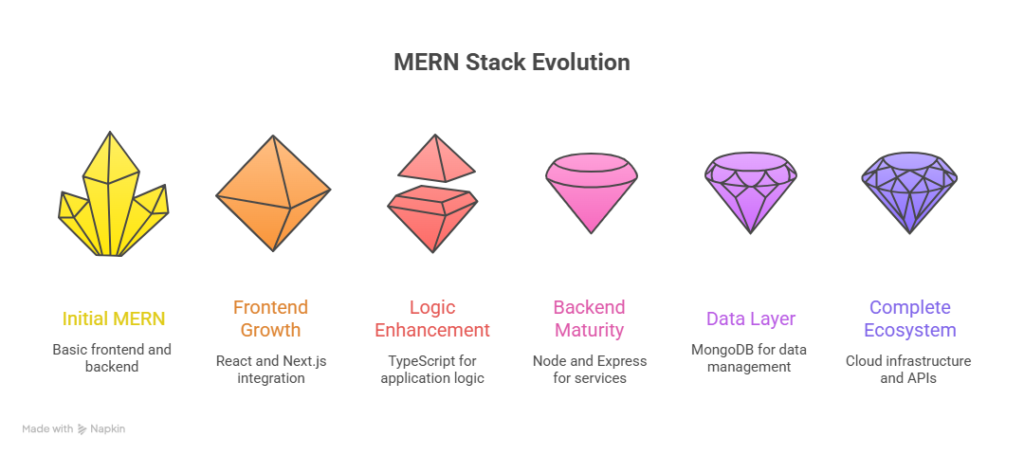
This hierarchy shows how MERN has matured into a complete software ecosystem.
Infographic description
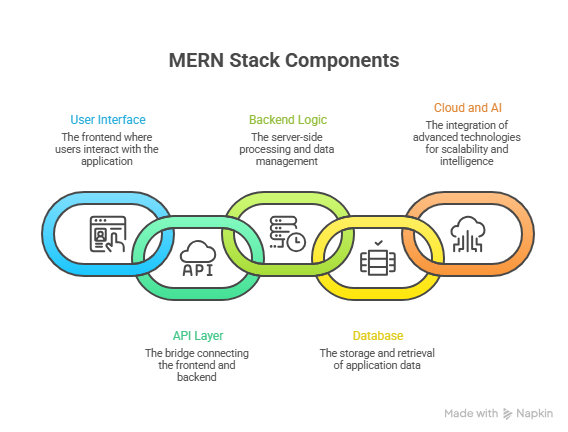
This visual represents how data and users interact with modern MERN platforms.
Conclusion
The MERN stack in 2025 is faster, safer, more scalable, and more intelligent than ever before. Developers who understand Next.js, TypeScript, cloud deployment, and API-driven design are the ones shaping the future of web applications.
Training environments like CuriosityTech play a key role in preparing developers for this future by blending strong fundamentals with modern tools, ensuring that students are not just job-ready but future-ready.