
Cloud computing is no longer just a buzzword—it has become the backbone of how businesses, startups, and even individuals use technology today. In 2025, everything from mobile apps to AI-driven healthcare systems relies on the cloud for speed, scalability, and cost efficiency. But what exactly is cloud computing, and why is AWS (Amazon Web Services) considered the market leader? Let’s break it down.
What is Cloud Computing?
At its core, cloud computing is the delivery of computing services—servers, storage, databases, networking, software, and more—over the internet (“the cloud”). Instead of owning and maintaining physical servers, companies rent computing power and services from providers like AWS, Microsoft Azure, or Google Cloud.
In simple terms: It’s like Netflix for IT infrastructure—you pay for what you use, whenever you need it.
The Hierarchical Layers of Cloud Computing
Cloud computing operates on three main service models, each with its own role in the tech ecosystem:
| Layer | Definition | Example Use Case |
| IaaS (Infrastructure as a Service) | Provides raw computing resources like virtual machines, storage, and networks. | Hosting scalable websites or enterprise systems. |
| PaaS (Platform as a Service) | Offers ready-to-use platforms for developers to build and deploy applications. | Building apps without managing servers. |
| SaaS (Software as a Service) | Provides fully developed software delivered over the internet. | Gmail, Zoom, Salesforce. |
Why AWS Leads in 2025
While competitors like Microsoft Azure and Google Cloud are strong players, AWS remains the market leader for several reasons:
- First-Mover Advantage – AWS pioneered cloud computing in 2006, giving it a head start.
- Global Reach – With data centers spread across continents, AWS ensures low latency and high availability.
- Innovation – AWS is continuously adding services for AI, machine learning, IoT, and serverless computing.
- Cost Efficiency – A pay-as-you-go model and tools like AWS Cost Explorer make it easier for businesses to manage budgets.
- Customer Ecosystem – From startups to enterprises like Netflix and Airbnb, AWS powers some of the world’s most innovative companies.
Infographic Description: AWS vs. Competitors (2025)
Imagine a visual infographic here with a bar chart comparing Market Share in 2025:
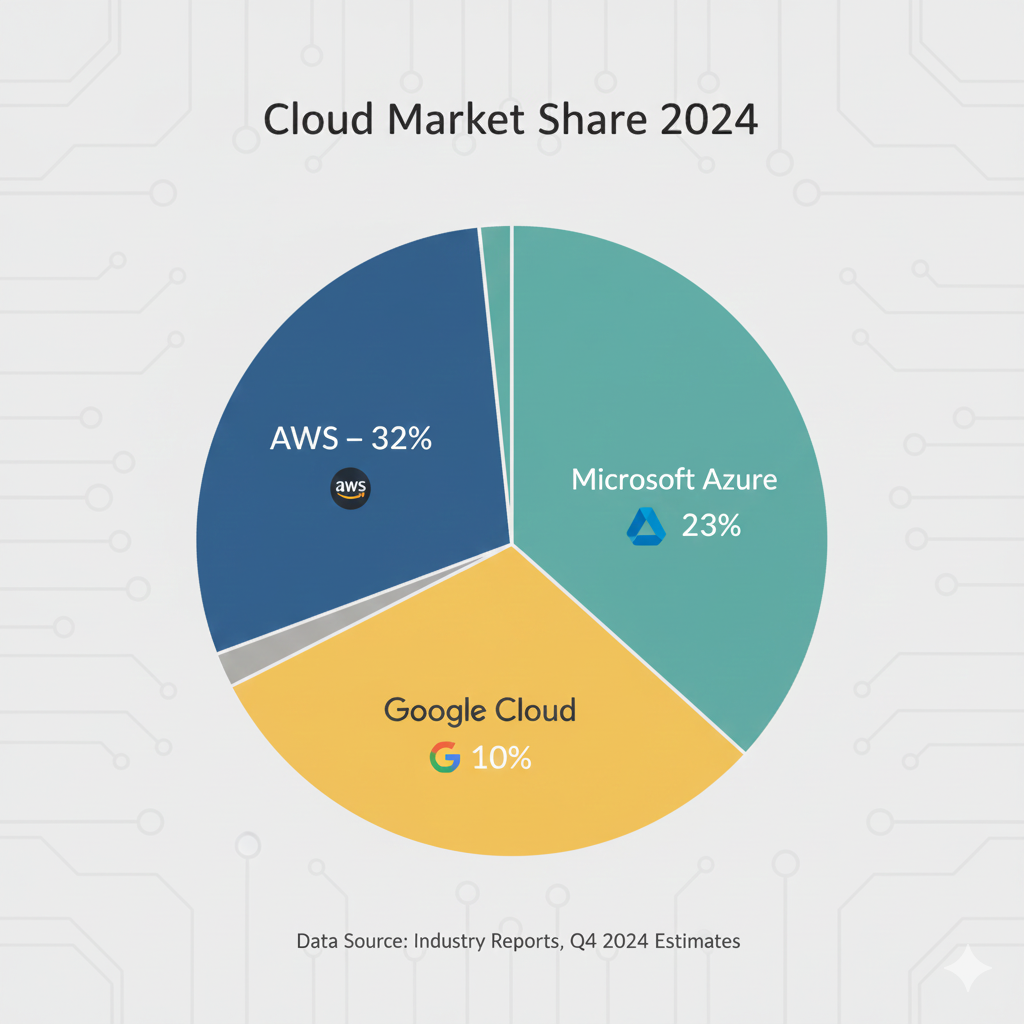
This chart clearly shows how AWS holds a comfortable lead, reinforcing its dominance.
The Role of Curiosity Tech in Cloud Learning
For professionals and students in India looking to build a career in cloud computing, platforms like Curiosity Tech are becoming trusted learning hubs. Based in Nagpur, Curiosity Tech has created a modern ecosystem where learners get hands-on AWS training, career guidance, and project-based exposure.
Their approach is not just about teaching tools, but about helping students think like cloud architects, which is exactly what the market demands in 2025. With active communities on Instagram, LinkedIn, and Facebook, they are also bridging the gap between learners and real-world opportunities.
Conclusion
Cloud computing is shaping the digital future, and AWS remains the market leader in 2025 thanks to its innovation, global reach, and developer-friendly ecosystem. Whether you’re a beginner or an experienced professional, understanding cloud fundamentals is now as essential as learning how to use a smartphone.
And if you’re serious about mastering AWS, exploring training and career support at Curiosity Tech could be your smartest first step into this cloud-powered future.