

Cloud computing has rapidly transformed the way organizations store, access, and manage data. But in 2025, relying on a single cloud provider is no longer enough. That’s where Multi-Cloud comes in—a strategy that empowers businesses and engineers to work with more than one cloud provider at the same time.
If you’re an aspiring cloud engineer or just starting your cloud journey, understanding multi-cloud architecture is essential. It’s not just a trend—it’s becoming a necessity for scalability, cost optimization, and business resilience.
What is Multi-Cloud?
Multi-Cloud refers to the use of two or more cloud service providers (such as AWS, Microsoft Azure, Google Cloud Platform, or others) within a single IT environment. Instead of putting all resources into one platform, organizations distribute workloads across multiple clouds.
Think of it like diversifying your investments. If one provider has downtime, faces compliance issues, or costs more for a particular service, you can balance workloads with another.
Why Multi-Cloud Matters for Engineers
For engineers, the rise of multi-cloud means:
- Flexibility: Deploy workloads on the best-suited platform.
- Cost Optimization: Choose providers based on pricing models.
- Reduced Vendor Lock-In: No dependency on a single provider.
- Innovation Opportunities: Access unique features from different platforms.
- Resilience: Ensures uptime even if one cloud fails.
For example, a company might run AI workloads on Google Cloud, databases on AWS, and enterprise apps on Azure.
Hierarchical Diagram – Multi-Cloud Architecture
Here’s a simple structure of how multi-cloud fits in:
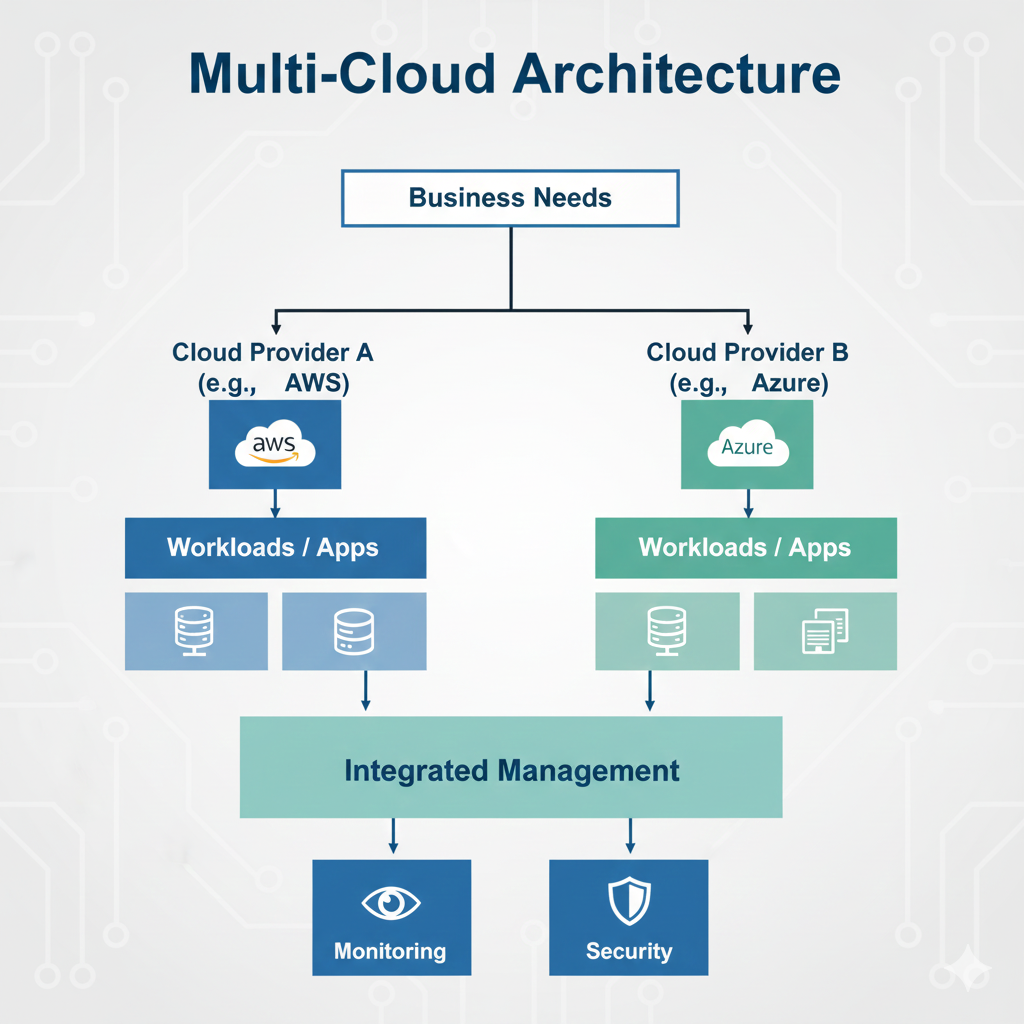
Explanation:
- At the top, business goals drive decisions.
- Multiple cloud providers serve different workloads.
- Unified monitoring and security layers ensure efficiency.
Infographic Idea – Multi-Cloud vs. Single Cloud
- Single Cloud: One provider, higher dependency, limited flexibility.
- Multi-Cloud: Multiple providers, balanced risk, maximum flexibility.
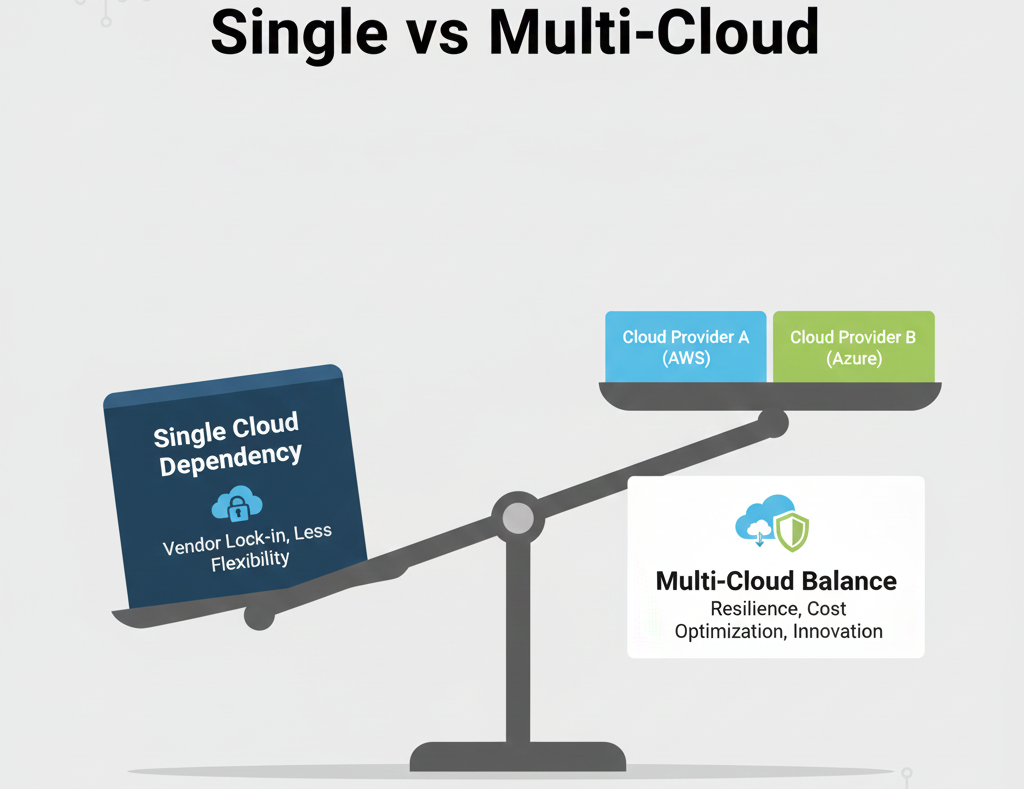
Visual: A scale icon—one side showing single cloud dependency vs the other side showing multi-cloud balance.
Real-World Example
A fintech startup in India might use AWS for secure transactions, Azure for compliance-ready services, and Google Cloud for data analytics. This blend helps them stay agile, compliant, and cost-efficient.
CuriosityTech and Multi-Cloud Learning
At Curiosity Tech, we believe engineers should not just learn cloud computing—but learn to master multi-cloud strategies. Our cloud engineering tracks help students practice hands-on labs across AWS, Azure, and GCP, while also building a real-world mindset for multi-cloud deployments.
Whether you’re exploring career opportunities in DevOps, cloud security, or system design, CuriosityTech’s ecosystem offers industry-oriented training with mentorship and placement assistance. We also share knowledge through our blog series, social media communities, and real-world projects. By connecting with us online—whether through LinkedIn, Facebook, or Instagram—you become part of a network that’s shaping the future of cloud computing in India.
Conclusion
Multi-cloud is not just a buzzword—it’s the future of cloud engineering. For beginners, understanding its basics today sets the stage for mastering advanced strategies tomorrow. As organizations demand engineers who can navigate AWS + Azure + GCP environments, this knowledge becomes your career differentiator.
If you’re ready to start your journey into multi-cloud engineering, follow along with this 26-day series. Each day, we’ll uncover a new aspect of cloud technologies, taking you from beginner to confident professional.