The year 2025 marks a turning point in technology. We’re standing at the intersection of artificial intelligence, automation, and decision intelligence. One term you’ll hear echoing across industries, from healthcare to e-commerce, is Machine Learning (ML). But what exactly does it mean, why is it so important, and how can you as a beginner start your journey toward becoming a professional ML engineer?
At Curiosity Tech, we’ve spent years mentoring students, professionals, and organizations on building strong AI foundations. Situated at 1st Floor, Plot No 81, Wardha Rd, Gajanan Nagar, Nagpur, our team often encounters this very first question: “What is machine learning, and where do I even begin?” Today, let’s answer it in depth.
1. The Concept of Machine Learning
At its core, machine learning is the science of teaching computers to learn patterns from data without being explicitly programmed. Instead of writing if-else rules, we provide a system with data + algorithms, and the system improves its performance over time.
In 2025, ML isn’t just an academic concept—it’s a business necessity. From predictive banking systems to Netflix recommendations, ML is silently shaping decisions you make daily.
2. The Evolution of Machine Learning (A Timeline Table)
| Year | Key Milestone in ML | Impact |
| 1950s | Alan Turing introduces the Turing Test | Laid foundation for AI thinking |
| 1980s | Neural networks gain traction | Early experiments with deep models |
| 2000s | Big Data + GPUs | Scalable ML applications |
| 2015 | Deep Learning revolution | Image & speech recognition leap |
| 2025 | Democratization of ML tools | Accessible to engineers, businesses, and students worldwide |
3. Types of Machine Learning (Hierarchical View)
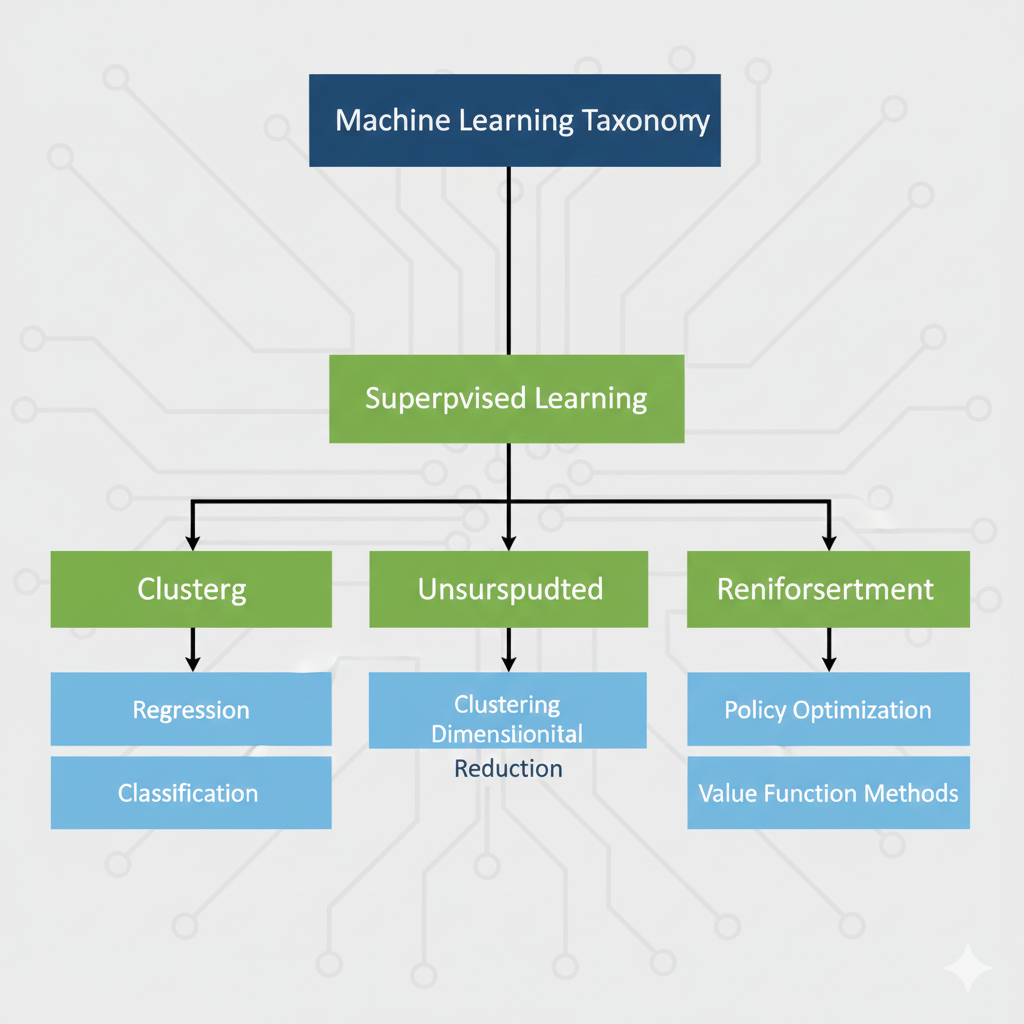
This simple tree diagram helps visualize how ML is categorized. Each branch requires different approaches, datasets, and applications.
4. Why 2025 is the Best Year to Start Learning ML
5. The Beginner’s Roadmap
At Curiosity Tech , we often tell learners: “Don’t jump directly into deep learning. Start simple, build strong.” Here’s a layered roadmap:
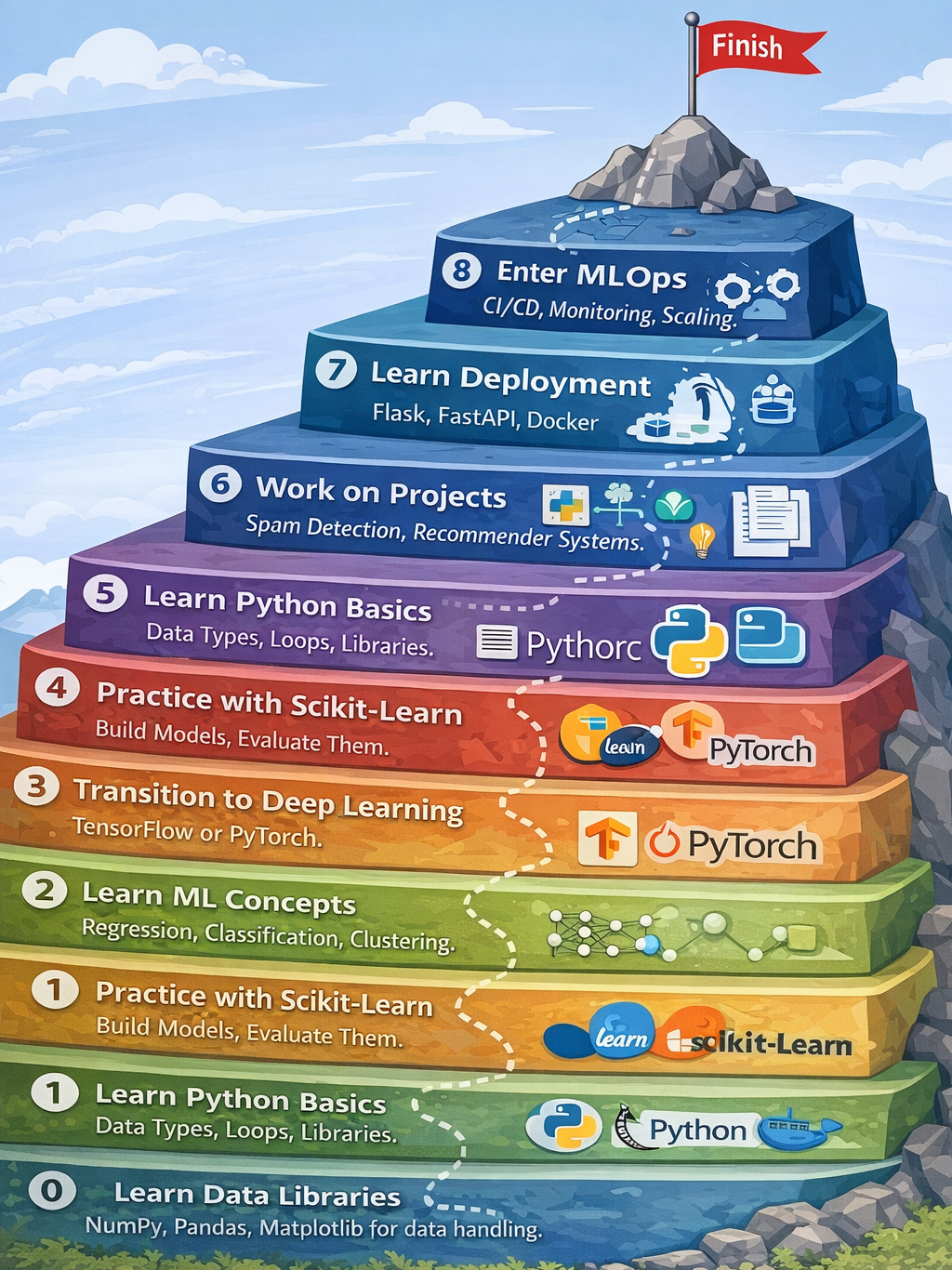
- Step 1: Learn Python basics – Data types, loops, libraries.
- Step 2: Explore Data Libraries – NumPy, Pandas, Matplotlib for data handling.
- Step 3: Learn ML Concepts – Regression, classification, clustering.
- Step 4: Practice with Scikit-Learn – Build models, evaluate them.
- Step 5: Transition to Deep Learning – TensorFlow or PyTorch.
- Step 6: Work on Projects – Spam detection, recommender systems.
- Step 7: Learn Deployment – Flask, FastAPI, Docker
- Step 8: Enter MLOps – CI/CD, monitoring, scaling.
6. Infographic (Description for Blog Visual)
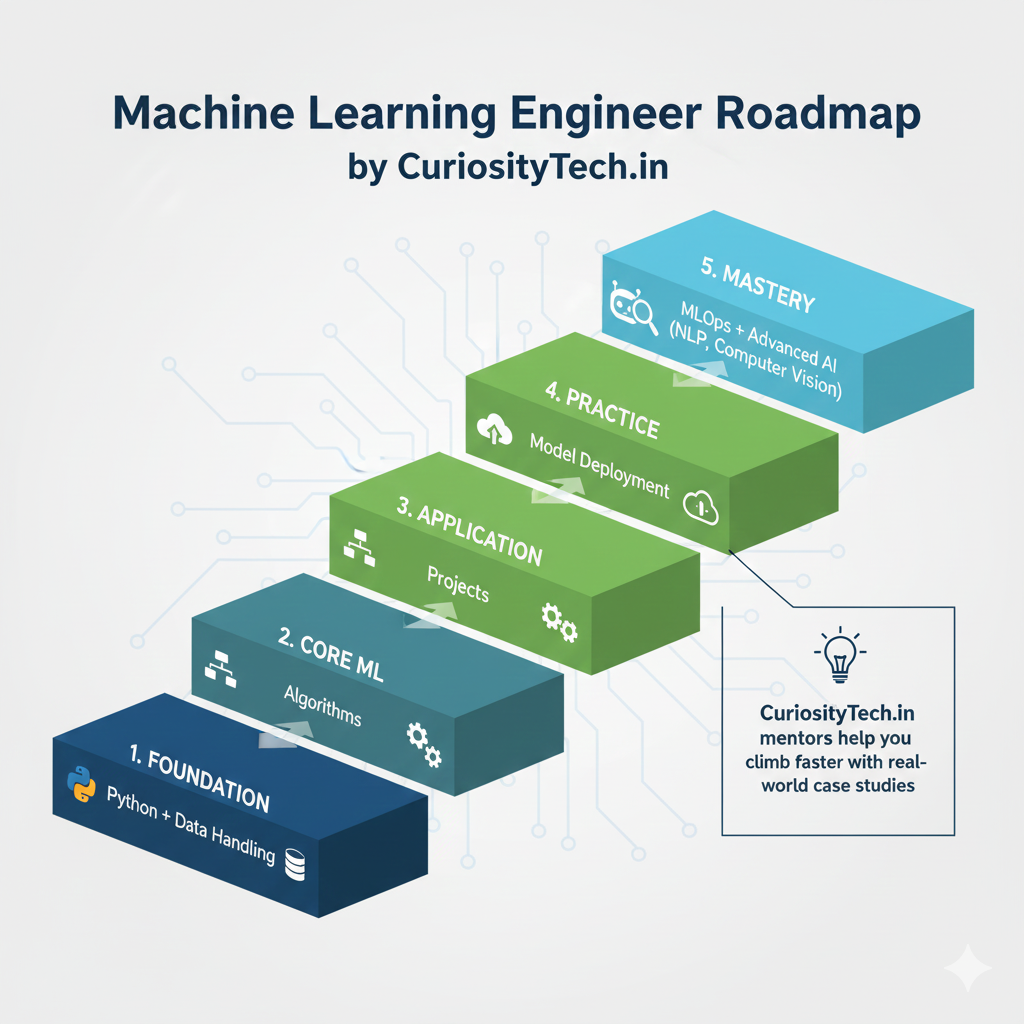
Imagine an infographic titled “Journey to Machine Learning Expertise” shaped like a ladder:
7. Practical Example: Predicting House Prices
Even as a beginner, you can build a model that predicts house prices using features like area, location, and number of bedrooms. This hands-on learning is exactly how our workshops at Curiosity Tech Nagpur guide students.
from sklearn.linear_model import LinearRegression
model = LinearRegression()
model.fit(X_train, y_train)
predictions = model.predict(X_test)
This 4-line snippet demonstrates the simplicity of ML—turning complex math into real applications.
8. Challenges Beginners Face (and How to Overcome)
- Overwhelm from too many resources → Follow structured 26-day series (like this).
- Fear of math → Start with intuition before equations.
- No community support → Engage on LinkedIn (Curiosity Tech), attend workshops.
- Lack of practice datasets → Use Kaggle or datasets we provide during our sessions.
9. Why Learn ML with Curiosity Tech ?
Unlike random online tutorials, we blend theory, practice, and mentorship. Whether you email us at contact @curiositytech.in or call +91-9860555369, our team ensures your ML journey is guided with industry perspective.
We’re not just educators—we’re practitioners working with startups and enterprises. That’s why our students often say: “Learning here feels human, not robotic.”
Conclusion
Machine Learning isn’t about coding alone; it’s about curiosity, experimentation, and impact. As 2025 unfolds, industries will keep shifting towards AI-driven decisions. The right time to start is now.
If you’re a beginner, follow this 26-day series closely. By the end, you’ll move from asking “What is ML?” to confidently answering interview questions about deploying real-world ML models.
At Curiosity Tech, Nagpur, our mission is to make sure no beginner feels left behind in this AI revolution.