Executive Summary
HR is no longer just about people skills; in 2025, it’s also about data literacy. HR Analytics has transformed into the decision-making backbone of successful companies. From predicting attrition to designing pay structures, managers who can interpret HR data hold a strategic advantage.
At Curiosity Tech in Nagpur, HR analytics isn’t treated as a back-office function — it’s a strategic boardroom tool. Leaders routinely use workforce data to drive hiring, engagement, retention, and training strategies.
Introduction: Why Data is the New HR Currency
Traditional HR decisions were based on intuition — “I feel this candidate will fit,” or “This department seems disengaged.” Today, such guesswork is risky.
- Data transforms HR into evidence-driven leadership.
- Analytics ensures fairness and transparency in policies.
- Predictive insights prevent crises like attrition or burnout before they happen.
In short: Without HR Analytics, managers fly blind.
Core Components of HR Analytics
| Analytics Area | Purpose | Example at Curiosity Tech |
| Recruitment Analytics | Identify best hiring sources, reduce time-to-fill | Found LinkedIn posts attract 2x better candidates than job boards |
| Engagement Analytics | Measure employee satisfaction, predict disengagement | Pulse surveys + sentiment analysis on Slack chats |
| Performance Analytics | Track productivity, align with goals | Dashboard connects OKRs to daily performance metrics |
| Learning Analytics | Measure training ROI | Post-training scores linked to project outcomes |
| Compensation Analytics | Ensure fair, competitive pay | Payroll analysis shows pay equity across gender and roles |
| Attrition Analytics | Predict turnover risk | AI flagged “flight-risk” employees months before resignations |
Whitepaper Section 1: Why HR Analytics Matters
- Objectivity in Decision-Making
- Removes bias in hiring, promotions, and pay.
- Example: At Curiosity Tech, pay equity analysis uncovered gaps in salary bands — leading to corrective measures.
- Removes bias in hiring, promotions, and pay.
- Predictive Power
- Instead of reacting, managers can anticipate problems.
- Early-warning systems reduce surprise resignations.
- Instead of reacting, managers can anticipate problems.
- Strategic HR
- Moves HR from an “administrative” role to a business enabler.
- Moves HR from an “administrative” role to a business enabler.
2: The HR Analytics Maturity Model

3: Case Study – Curiosity Tech’s HR Analytics in Action
Problem: High attrition among mid-level engineers in 2023.
Analytics Used:
- Exit interviews analyzed with NLP (natural language processing).
- Engagement surveys scored on a 10-point scale.
- Overtime hours and leave patterns flagged by HRIS.
Findings:
- Employees felt growth was stagnating.
- Certain teams logged excessive overtime.
- Lack of recognition was a recurring theme.
Action Taken:
- Launched Leadership Development Programs.
- Adjusted workloads by hiring support staff.
- Introduced real-time recognition tools.
Results (Within 12 Months):
- Attrition dropped from 22% to 11%.
- Engagement scores rose by 31%.
- Curiosity Tech’s LinkedIn employer branding score improved significantly.
Whitepaper Section 4: Text-Based Analytics Visualization
Attrition Risk Prediction (Sample from Curiosity Tech)
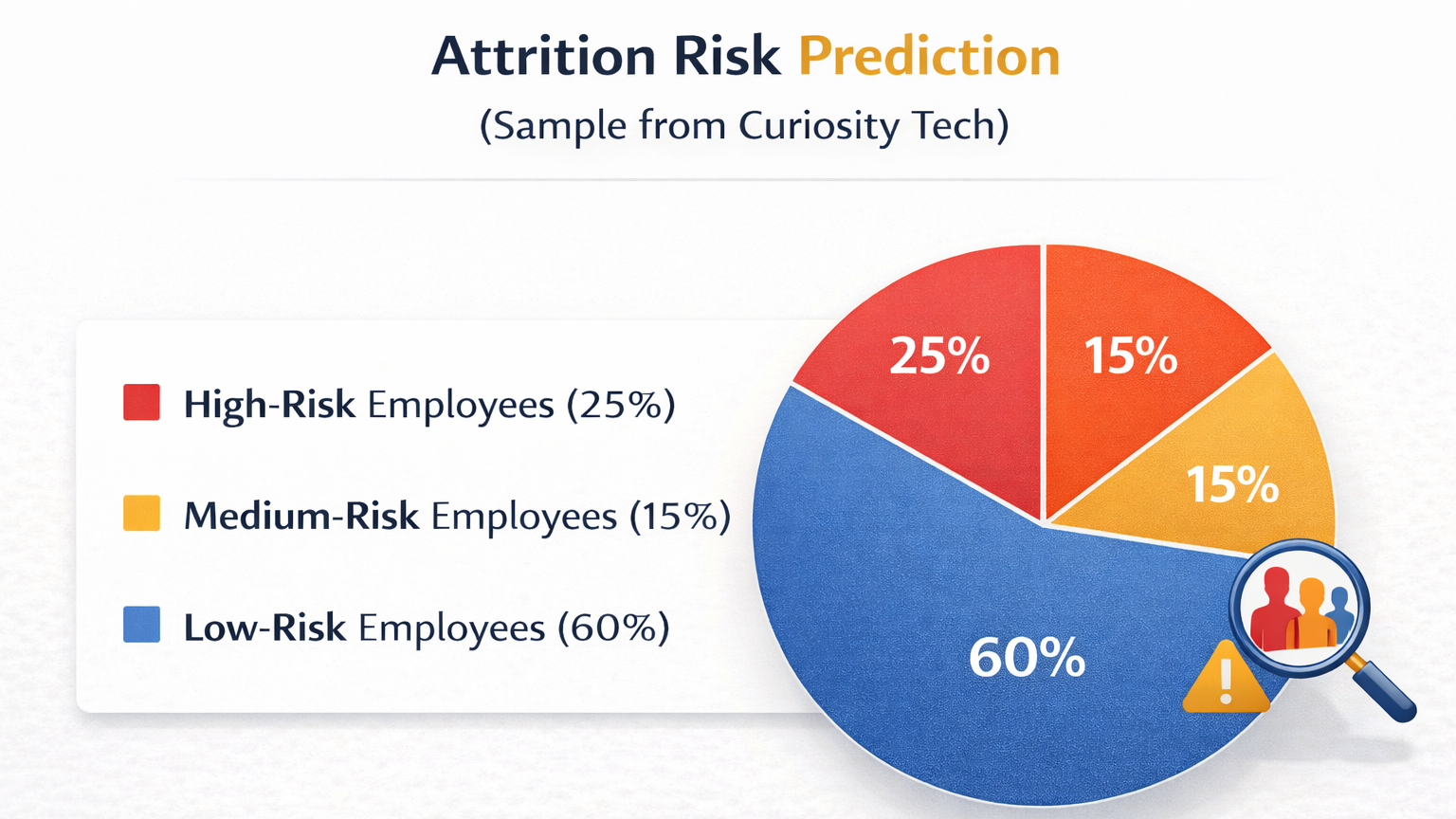
- High-Risk Employees:- ██████████ (25%)
- Medium-Risk Employees:- ██████ (15%)
- Low-Risk Employees:- ██████████████████ (60%)
- Visual suggestion: Pie chart showing distribution of risk categories.
Engagement Score Trend (Last 6 Quarters):- Line graph trending upward over 6 quarters.

Whitepaper Section 5: Challenges in Implementing HR Analytics
- Data Quality Issues – Garbage in = garbage out.
- Resistance from Managers – Some fear being “measured.”
- Privacy Concerns – Sensitive employee data must be protected.
- Skill Gap – Managers need upskilling in data interpretation.
Curiosity Tech overcame these by:
- Implementing strict data governance policies.
- Training managers in basic analytics literacy.
- Using cloud-based HRIS for accuracy and security.
Whitepaper Section 6: Future of HR Analytics (2025–2030)
- AI-Driven Predictive Models will spot burnout weeks before it happens.
- Integration with Wearables (health & wellness analytics).
- Ethical AI in HR — ensuring fairness in algorithmic decisions.
- Hyper-Personalized Employee Journeys — each employee will get custom recommendations for growth, pay, and engagement.
Manager’s Playbook: Using HR Analytics for Better Decisions
- Always align metrics with business outcomes.
- Use dashboards, not static reports, for real-time insights.
- Pair data with human judgment — analytics is a tool, not a dictator.
- Communicate insights in simple, visual formats for easy adoption.
- Apply analytics ethically — employees must feel trust, not surveillance.
Conclusion
HR Analytics is no longer optional. For managers, it’s a career-defining skill. The ability to interpret workforce data means making decisions that are faster, fairer, and future-ready.
At Curiosity Tech., HR Analytics is woven into daily decision-making — from recruitment to retention. This data-driven HR approach not only strengthens operations but also builds employee trust and market credibility.
Managers who embrace HR Analytics today will become the strategic HR leaders of tomorrow.