Abstract
In 2025, customers are more informed, more cautious, and more selective than ever before. They compare options, read reviews, and analyze prices before making decisions. Objections are no longer a sign of rejection; they are a sign of interest. Over my twenty years in sales consulting, the strongest performers were never those who spoke the most, but those who listened best.
Sales teams trained through modern institutions like Curiosity Tech understand that objections are simply unanswered questions. Whether a learner contacts curiositytech.in, sends an email to contact@curiositytech.in, or walks into the Nagpur office on Wardha Road, the real goal of the conversation is not pressure, but clarity.
Why Customers Raise Objections
Every objection comes from uncertainty. Buyers worry about cost, value, risk, time, or trust.
Objections usually fall into five categories
Price
Timing
Need
Trust
Authority
A high-performing salesperson learns to identify which category an objection belongs to before responding.
The Psychology Behind Objections
When a customer says “I need to think about it,” they are not rejecting the product. They are protecting themselves from making a wrong decision. The brain is wired to avoid risk.
Great salespeople guide customers through this fear by providing
Clear outcomes
Social proof
Logical reasoning
Emotional reassurance
At Curiosity Tech, sales teams are trained to explain how skills learned in programming, data science, or cloud computing directly translate into career growth, helping customers feel safe in their investment.
Structured Objection Handling Model
Four-Step Response Framework
Listen completely
Acknowledge the concern
Clarify the real issue
Provide a solution
This prevents defensive selling and builds trust.
Common Objections and Smart Responses
| Objection Type | Real Meaning |
| It is expensive | I am not sure about the value |
| I need time | I am afraid of making a mistake |
| I will decide later | I do not see urgency |
| I need approval | I need justification |
Understanding meaning is more important than memorizing scripts.
The Science of Closing Deals
Closing is not a moment. It is the natural outcome of a well-guided conversation. When customers feel understood and informed, they close themselves.
High-Conversion Closing Flow
Customer pain identified
Solution aligned
Value demonstrated
Risk removed
Decision confirmed
This is how sales teams at Curiosity Tech move students from inquiry to enrollment without pressure.
Sales Funnel Hierarchy
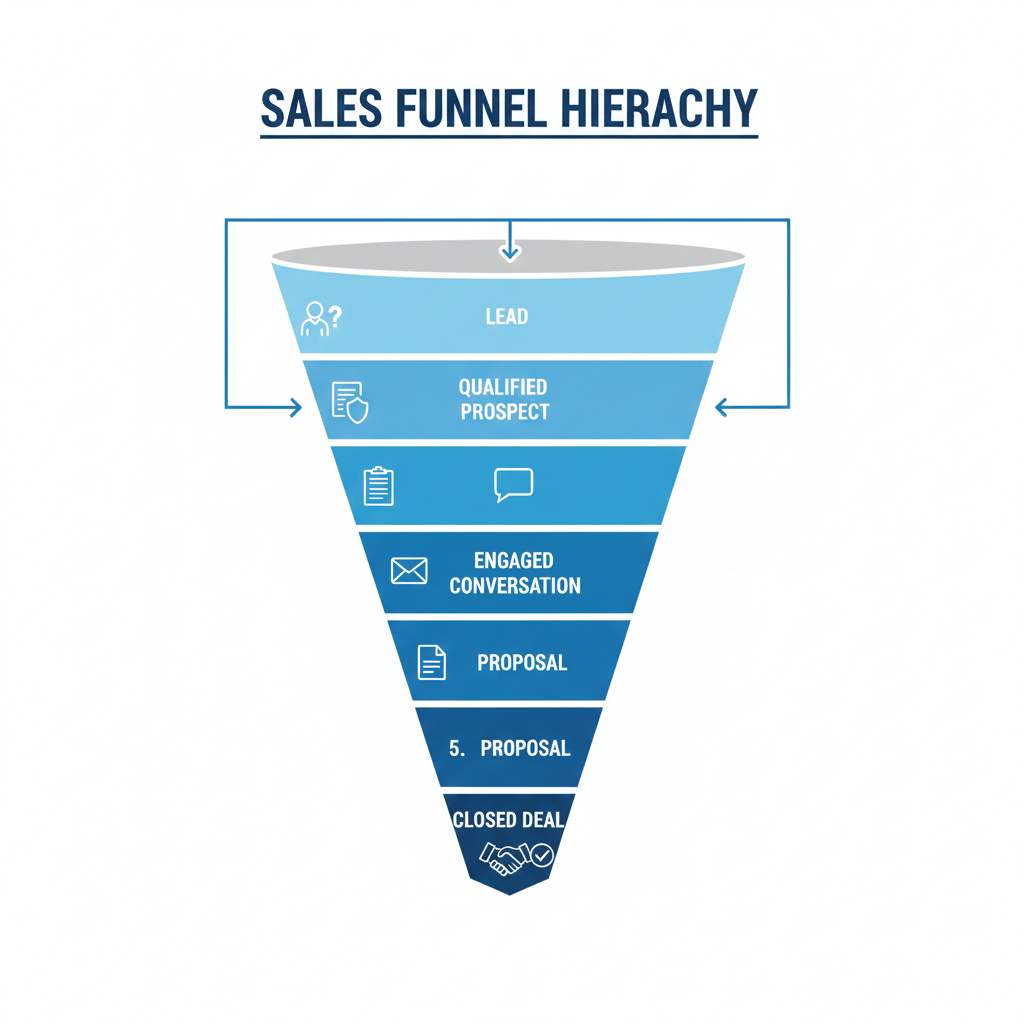
Each step builds confidence and momentum.
Infographic Description
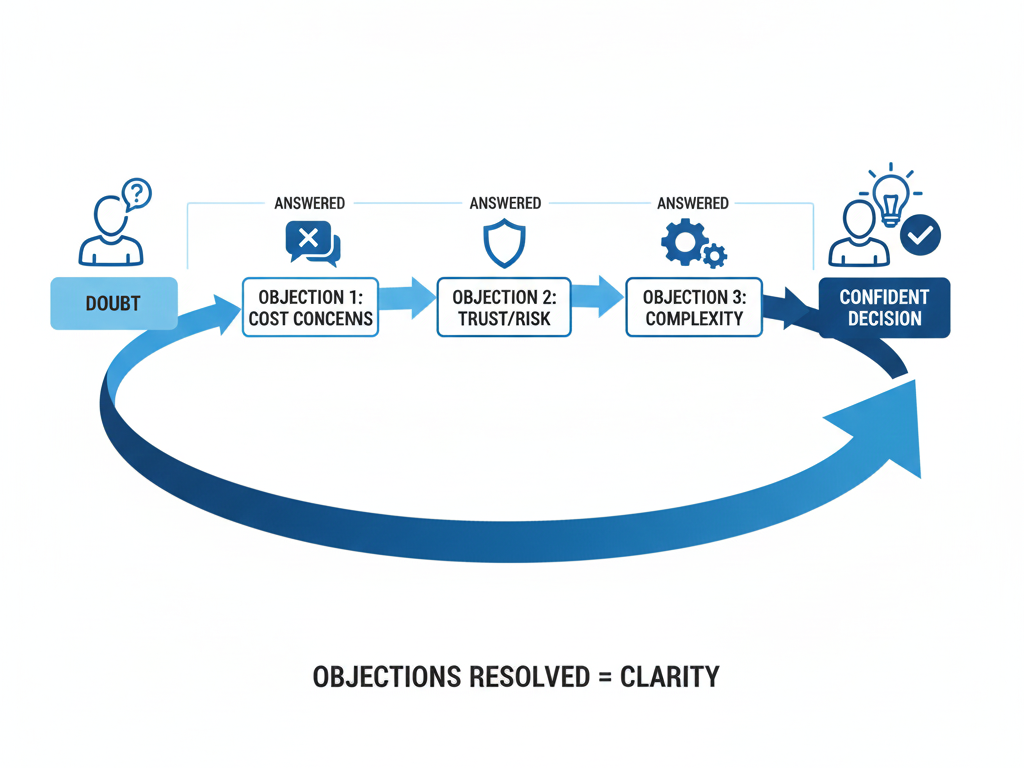
A visual showing a customer moving from doubt to clarity as objections are answered one by one until they reach a confident decision.
How Sales Professionals Master Closing
They practice listening more than talking. They learn to read tone, hesitation, and emotion. Over time, they recognize patterns in objections and respond naturally instead of mechanically.
Curiosity Tech uses real call reviews and scenario training so salespeople become consultants, not persuaders.
Conclusion
Objections are not barriers; they are invitations to explain value. When sales teams master objection handling, closing becomes a smooth and honest process. In modern sales, trust closes more deals than tactics ever could.