

In today’s rapidly evolving IT landscape, DevOps has emerged as more than just a buzzword—it is a culture, a set of practices, and a bridge between development and operations that ensures software delivery is faster, more reliable, and consistently high quality. For anyone aspiring to be a DevOps engineer, understanding the essential skills is critical. In this post, we’ll dive deep into the key competencies, tools, and mindset every DevOps professional must cultivate, along with insights from Curiosity Tech, a hub for technology enthusiasts and learners.
Understanding the DevOps Mindset
Before diving into technical skills, it’s important to understand that DevOps is as much about culture as it is about tools. At its core, DevOps emphasizes collaboration, continuous improvement, and automation. A DevOps engineer is not just a coder or a system administrator—they are problem-solvers who streamline workflows, reduce silos between teams, and foster innovation.
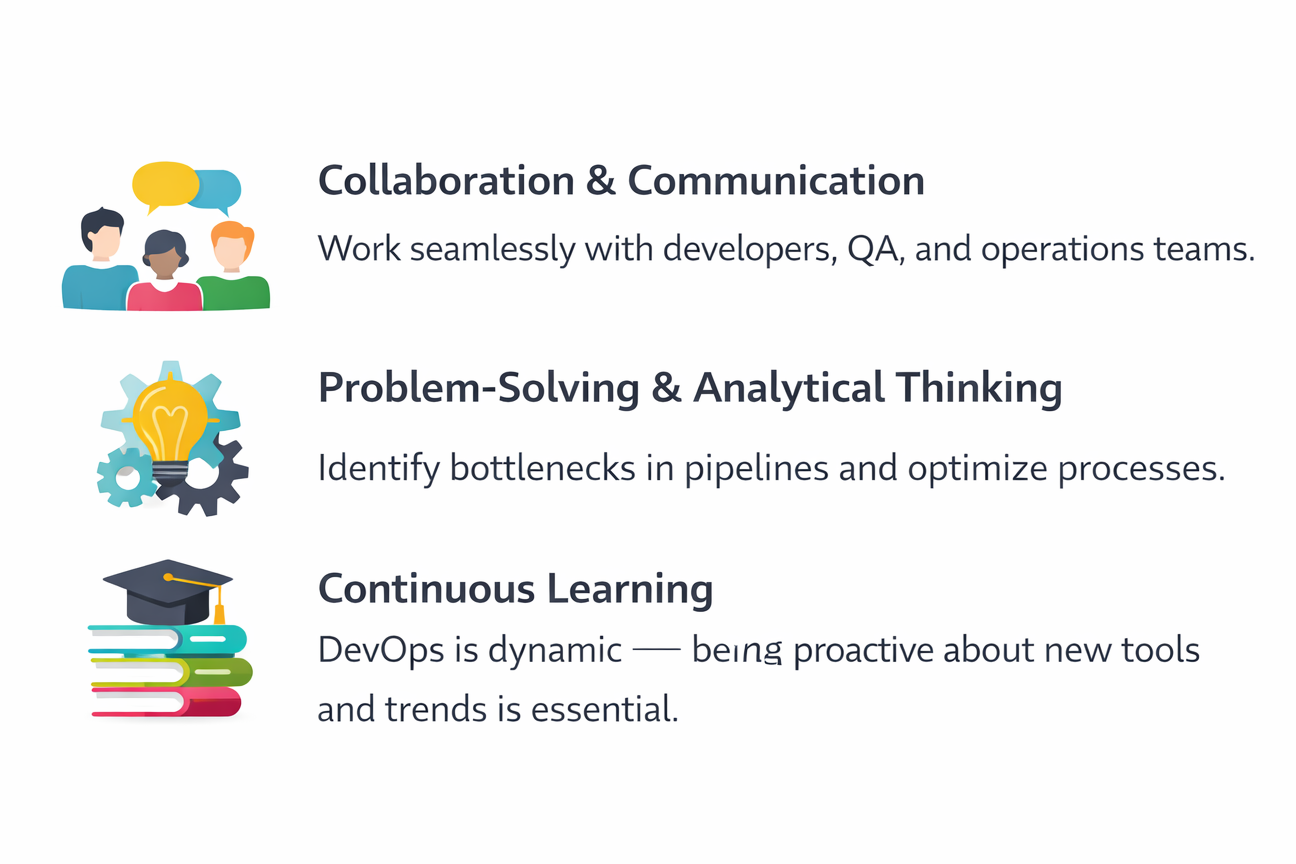
Some foundational mindset attributes include:
- Collaboration & Communication: Work seamlessly with developers, QA, and operations teams.
- Problem-Solving & Analytical Thinking: Identify bottlenecks in pipelines and optimize processes.
- Continuous Learning: DevOps is dynamic—being proactive about new tools and trends is essential.
CuriosityTech.in emphasizes hands-on learning and community engagement, which helps budding DevOps engineers develop these soft skills naturally while working on real-world projects.
Core Technical Skills Every DevOps Engineer Needs
To thrive as a DevOps engineer, technical mastery is non-negotiable. Below is a breakdown of essential skill sets:
1. Version Control Systems (VCS)
Version control is the backbone of DevOps. Proficiency with tools like Git, GitHub, or GitLab ensures:
- Efficient collaboration across teams
- Tracking and managing code changes
- Facilitating continuous integration pipelines
2. Continuous Integration/Continuous Deployment (CI/CD)
CI/CD pipelines automate the process of testing, integrating, and deploying code. Skills include:
- Jenkins, CircleCI, GitLab CI, or Azure DevOps
- Automating build and deployment workflows
- Monitoring pipeline health and handling rollback strategies
3. Infrastructure as Code (IaC)
IaC enables engineers to provision and manage infrastructure programmatically. Key tools:
- Terraform: Cross-cloud infrastructure automation
- Ansible: Configuration management
- CloudFormation: AWS-specific automation
IaC reduces manual errors and ensures reproducible environments, a key principle in modern DevOps practices.
4. Cloud Computing Proficiency
Cloud platforms are central to DevOps. Skills include:
| Cloud Provider | Key Services for DevOps | Skills Required |
| AWS | EC2, S3, Lambda, CloudFormation | Deploy scalable apps, manage storage, automate serverless functions |
| Azure | Virtual Machines, DevOps Pipelines, ARM Templates | Integrate pipelines with Azure services, automate deployments |
| GCP | Compute Engine, Cloud Build, Cloud Functions | Cloud-native deployment, monitoring, and scaling |
Being cloud-agnostic is advantageous, and CuriosityTech.in provides tutorials across AWS, Azure, and GCP, preparing engineers for multi-cloud environments
5. Containerization and Orchestration
Containers ensure applications run consistently across environments. Essential tools:
- Docker: Build, ship, and run containerized apps
- Kubernetes: Orchestrate containerized apps at scale
- Knowledge of Helm charts and service meshes enhances deployment efficiency
6. Monitoring and Logging
DevOps isn’t complete without observability. Skills include:
- Using Prometheus, Grafana, or ELK Stack
- Real-time monitoring of infrastructure and applications
- Setting up alerts and dashboards for proactive problem resolution
Hierarchical Skill Diagram for DevOps Engineers
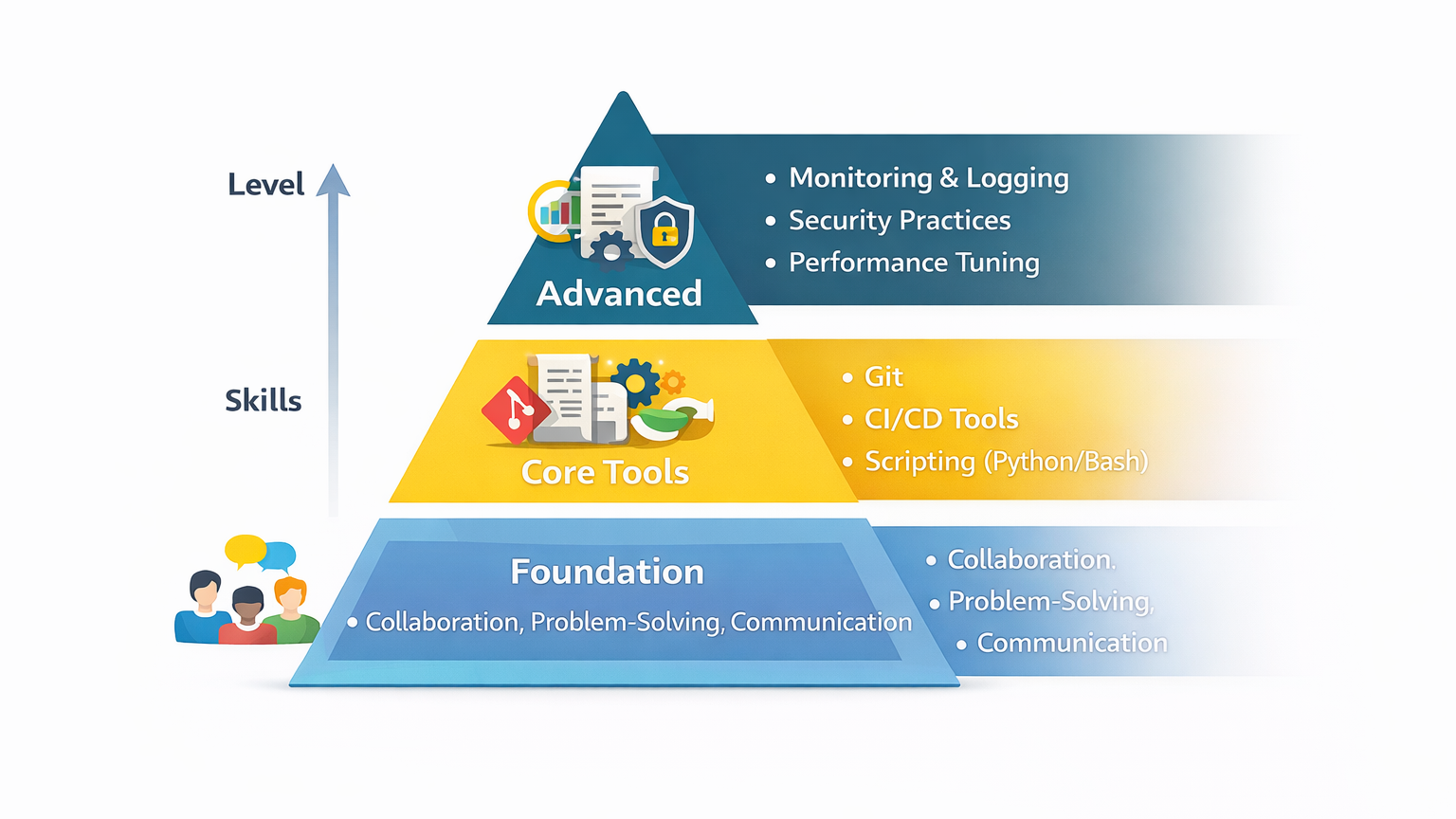
Here’s a structured representation of the essential DevOps skills:
| Level | Skills |
| Foundation | Collaboration, Problem-Solving, Communication |
| Core Tools | Git, CI/CD Tools, Scripting (Python/Bash) |
| Infrastructure Management | IaC, Cloud Platforms, Containerization |
| Advanced | Monitoring & Logging, Security Practices, Performance Tuning |
Visual Infographic Suggestion: A pyramid starting with mindset at the base, core tools in the middle, and advanced skills at the top—illustrating the progressive mastery required in DevOps.
The Role of Curiosity Tech in DevOps Learning
CuriosityTech.in is more than just a blog—it is a learning ecosystem. Whether you are a beginner or an intermediate learner:
- Interactive tutorials cover cloud platforms, CI/CD, and automation workflows.
- Community discussions provide peer support and real-world problem-solving scenarios.
- Detailed guides and case studies help engineers implement skills in practical environments.
By combining technical mastery with continuous learning through CuriosityTech, aspiring DevOps engineers can stay ahead in this competitive field.
Conclusion
Becoming a successful DevOps engineer requires a delicate balance of technical expertise, problem-solving skills, and cultural mindset. Mastery over version control, CI/CD, IaC, cloud computing, containerization, and monitoring forms the technical backbone, while collaboration, communication, and adaptability define the DevOps ethos. Resources like Curiosity Tech. not only provide practical tutorials but also nurture the curiosity and persistence required to excel.

